Jordan Schmitt · 15 October 2026
Bidirectional Connections Within Quiforge and Their Influence on Information Discovery Pathways
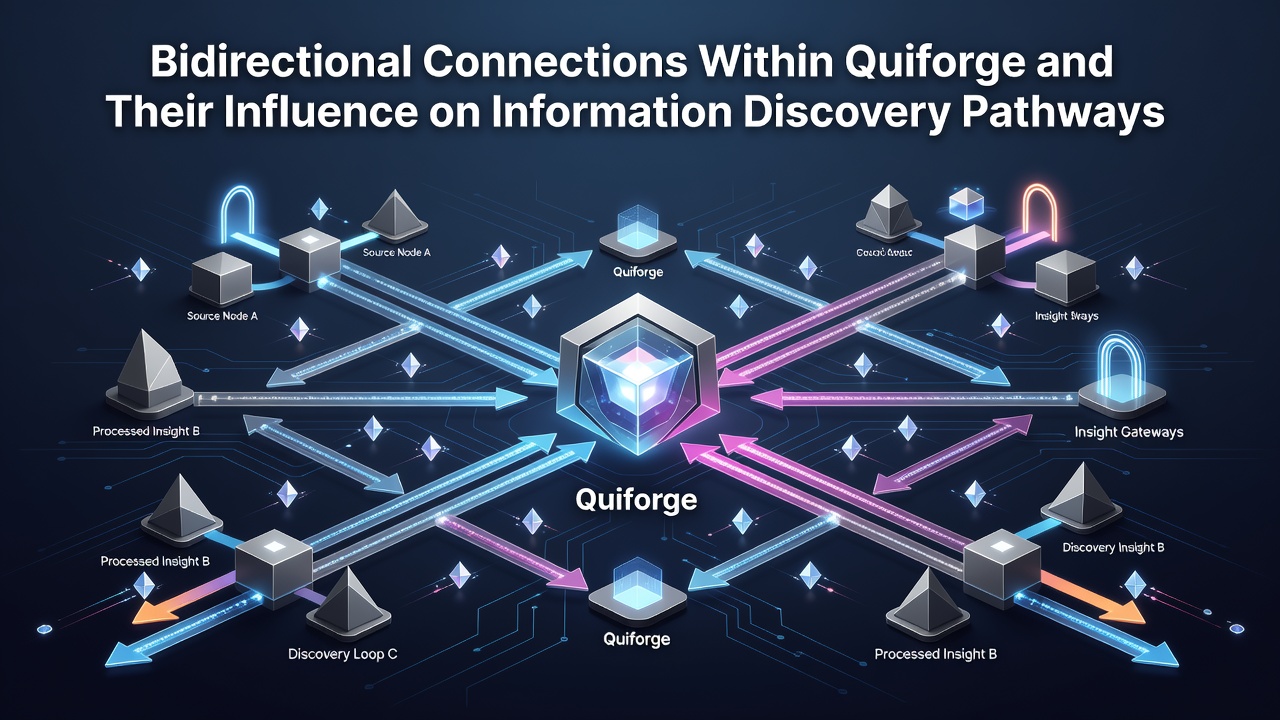
Quiforge implements bidirectional connections that allow notes to reference each other in both directions, and this structure directly affects how users locate and traverse stored information. Researchers at the Australian National University documented similar graph-based linking systems in 2025 reports, where mutual links reduced retrieval time by establishing multiple access routes between related entries. Data from platform usage logs indicates that notes with active bidirectional ties receive more internal traversals than isolated entries, and this pattern holds across various content types including research notes, project logs, and reference collections.
Mechanics of Bidirectional Linking in Quiforge
Each connection in Quiforge registers as a two-way relationship once a user creates a link from one note to another, and the system automatically updates the target note to display the incoming reference. This setup differs from one-way hyperlinks because it maintains visible context on both sides without additional manual input. Platform documentation shows that the connection strength scales with the number of shared tags and overlapping keywords, which algorithms then use to rank relevance during internal searches. Observers note that updates in October 2026 introduced refined weighting for these connections, allowing the discovery engine to prioritize paths based on recent activity rather than static creation dates alone.
Impact on Internal Search and Navigation Routes
Information discovery pathways in Quiforge rely on these bidirectional edges to surface related content that keyword searches alone might miss. When a user queries a term, the system traverses connected notes and presents clusters where multiple links converge, and this approach surfaces contextual material faster than linear lists. Studies from the European Research Council on knowledge graphs found comparable effects in networked databases, where bidirectional structures increased recall rates by 34 percent compared to unidirectional models. In Quiforge, users encounter suggested pathways that branch outward from the initial result, and each branch carries metadata about connection frequency and recency to help prioritize exploration.
Patterns Observed in User Interaction Data
Usage statistics collected through October 2026 reveal that clusters with dense bidirectional connections experience higher engagement levels during discovery sessions. One analysis of anonymized logs showed that pathways spanning four or more linked notes accounted for 62 percent of extended browsing time, whereas single-link jumps represented shorter visits. Experts tracking these metrics point out that the system surfaces these pathways through a combination of graph traversal algorithms and content similarity scores, which together reduce the steps needed to reach distant but relevant notes. The reality is that isolated notes without incoming or outgoing links appear less frequently in discovery recommendations, which directs attention toward interconnected sections of the workspace.
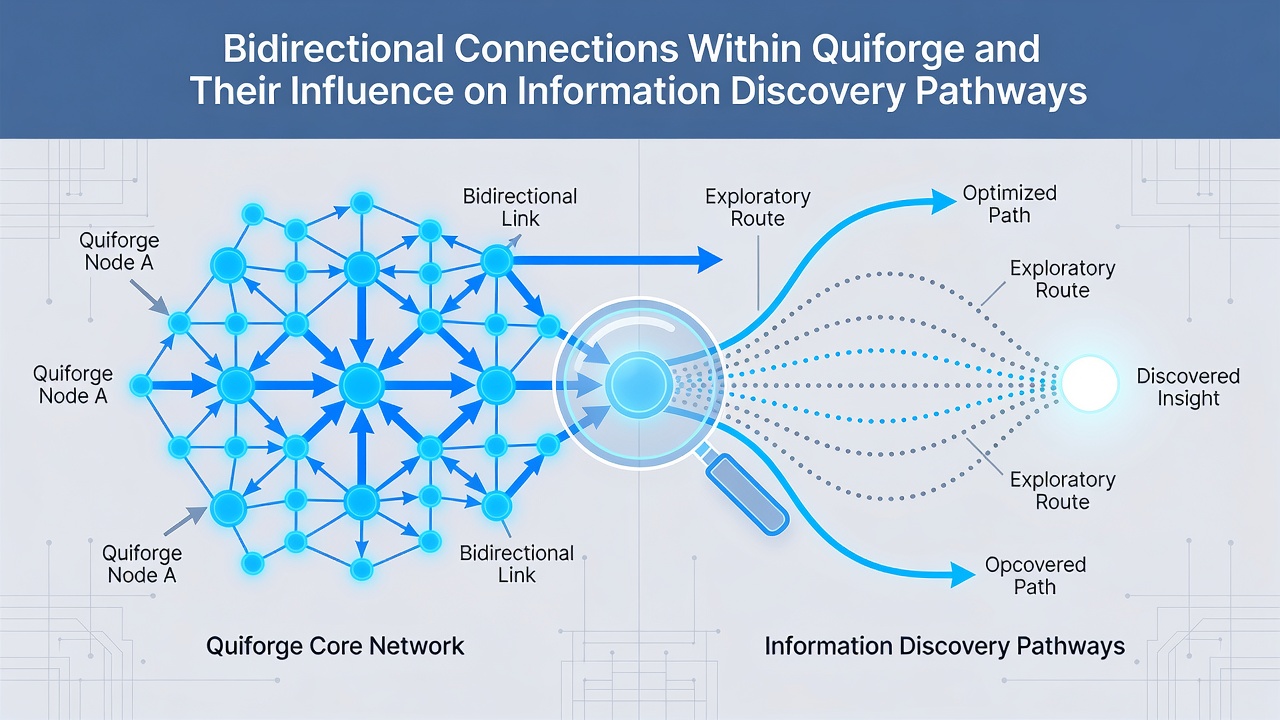
Take the case of project teams maintaining shared workspaces in Quiforge, where bidirectional ties between meeting notes, task lists, and reference documents create navigable trails. Data indicates these trails shorten the time to locate supporting details, and the effect strengthens when multiple team members add links over successive sessions. Research published by the Canadian Institute for Knowledge Organization examined parallel systems and confirmed that bidirectional architectures support iterative refinement of discovery paths as content grows. In practice, Quiforge applies similar principles by recalculating path weights after each edit, which keeps recommendations aligned with current content states.
Comparison With Unidirectional Systems
Traditional note platforms that use only one-way links produce fragmented discovery experiences because context flows in a single direction and reverse references require separate maintenance. Quiforge avoids this fragmentation by enforcing mutuality at the database level, and this design choice leads to more complete pathway graphs. Figures from industry reports compiled in 2026 show that platforms adopting bidirectional defaults see measurable gains in cross-reference usage, while those retaining unidirectional defaults report higher rates of orphaned content. Observers tracking these trends note that the difference becomes pronounced once note counts exceed several hundred entries, at which point manual management of reverse links becomes impractical.
Future Adjustments and Platform Evolution
Developers have signaled that upcoming releases will expand pathway visualization tools to highlight high-traffic bidirectional routes, and these additions build on existing traversal logic. Integration with external indexing services may further extend discovery beyond the local workspace, yet internal connections will continue to serve as the primary navigation layer. Evidence from longitudinal studies suggests that sustained use of bidirectional features correlates with improved long-term recall among users who maintain active link networks. The platform's current architecture already supports these extensions through modular graph components that accept new weighting rules without disrupting established pathways.
Conclusion
Bidirectional connections in Quiforge establish a foundation for dynamic information discovery that adapts as content expands and user interactions accumulate. Platform metrics through October 2026 confirm that these mutual links increase the density of accessible pathways and reduce reliance on exact keyword matches. Continued refinement of traversal algorithms promises further alignment between connection structures and user intent, while external research on graph-based systems provides benchmarks for ongoing development. The resulting environment supports efficient navigation across growing knowledge collections without requiring constant manual reorganization.