Paul Hansen · 1 October 2026
Analyzing Interconnected Note Architectures and Their Role in Modifying Search Engine Interpretation of Knowledge Webs
Interconnected note architectures consist of digital systems that link individual notes through bidirectional connections, graph structures, and hierarchical tags, which creates dynamic networks rather than isolated documents, and researchers observe these setups reshaping how search engines process clusters of related information.
Systems built on tools like Obsidian or Roam Research rely on [[wiki-style links]] that form explicit relationships between entries, while metadata fields add layers of categorization; data from multiple studies shows these patterns influence crawler behavior by signaling content proximity and thematic overlap.
Core Components of Note Architectures
At the foundation sit atomic notes that contain single ideas, and these connect outward through direct references, block embeds, and transclusion features, which allow one piece of content to appear across multiple contexts without duplication; experts note that such mechanisms generate dense webs where nodes represent concepts and edges represent relationships.
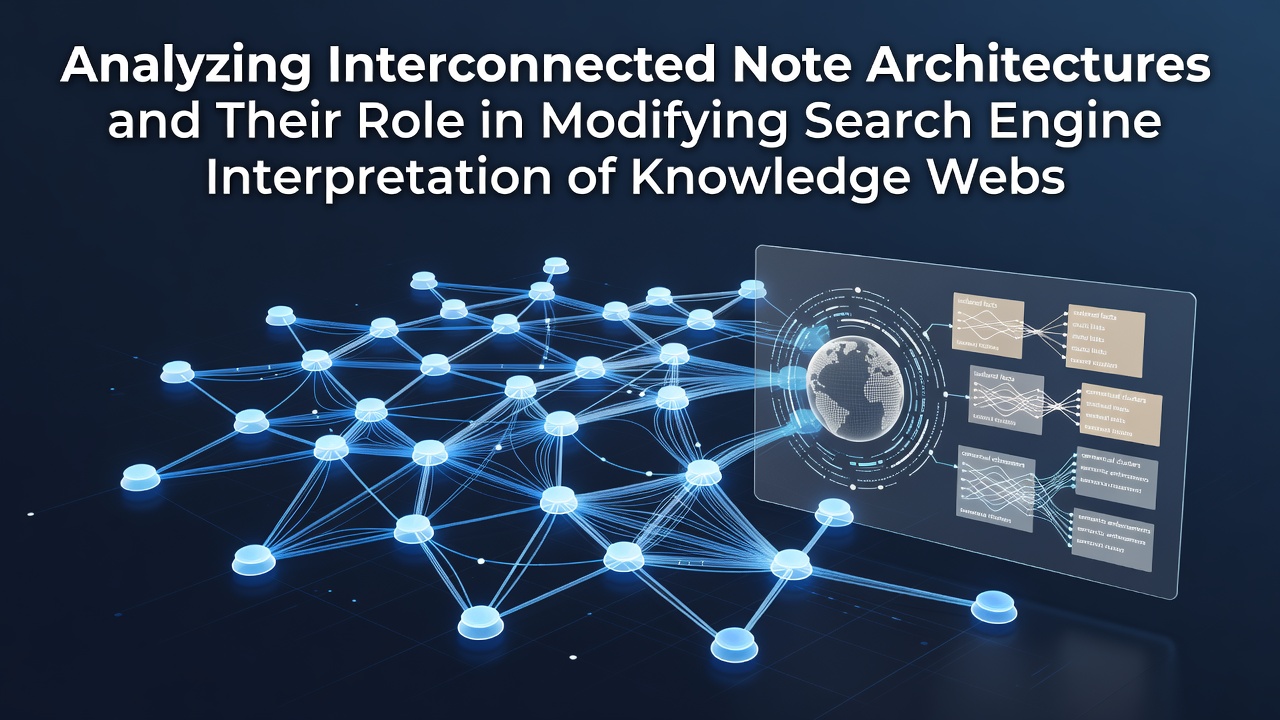
Graph visualizations display these connections in real time, revealing central hubs and peripheral clusters, whereas search engine algorithms encounter the same structures through HTML link graphs and structured data markup when notes publish online.
Search Engine Crawling and Knowledge Interpretation
Crawlers follow hyperlinks to map site architecture, yet interconnected note systems introduce additional signals through repeated cross-references and contextual embeds that strengthen topical authority within specific domains; figures from academic analyses indicate that dense internal linking correlates with improved semantic understanding by major engines.
Knowledge webs emerge when notes aggregate into thematic clusters, and search engines interpret these as evidence of comprehensive coverage on a subject, while October 2026 updates to indexing protocols emphasized entity recognition in networked content, leading platforms to prioritize sites displaying clear relational patterns.
One study from the University of Melbourne examined how graph-based note exports affect entity extraction, revealing that bidirectional links help algorithms identify core concepts more accurately than linear page hierarchies alone.
Impact on Fragmented Content Clusters
Fragmented content often appears scattered across separate notes, but architectures that enforce consistent linking consolidate these fragments into coherent webs; observers report that search engines respond by treating the entire network as a single authoritative source when link density exceeds certain thresholds.

Take one case where a research team published notes on climate data patterns, connecting temperature records to policy documents and regional studies, and the resulting structure allowed crawlers to traverse related topics efficiently, which improved indexing speed according to internal metrics shared in technical reports.
Metadata schemas such as schema.org annotations further clarify relationships for machines, and when applied to note architectures they reduce ambiguity in knowledge graph construction; data indicates that sites adopting these practices experience measurable shifts in how engines rank interconnected pages.
Technical Mechanisms Driving Modification
Link equity flows differently through graph structures because multiple paths lead to the same node, distributing authority across the web rather than concentrating it on single pages; researchers discovered that this distribution modifies interpretation by highlighting emergent themes that linear sites might overlook.
Embedding and transclusion create repeated exposure to key phrases within varied contexts, which reinforces semantic signals without keyword stuffing, and algorithms detect these repetitions as indicators of depth.
Yet challenges arise when orphaned notes lack incoming links, since crawlers may deprioritize them, whereas well-connected clusters receive sustained attention during indexing cycles.
Case Examples from Published Research
Analysts at a Canadian digital humanities project documented how migrating traditional wikis into note-graph formats altered external link profiles, and search visibility for core topics increased after the transition because engines better mapped the expanded relational data.
Another examination from Australian universities focused on educational note repositories, where interconnected entries on historical events formed webs that engines interpreted as unified knowledge bases rather than disparate articles.
Conclusion
Interconnected note architectures continue to influence search engine interpretation by providing structured signals that extend beyond traditional page-level analysis, and ongoing developments in entity detection reinforce their role in shaping knowledge web visibility. Data shows consistent patterns where dense linking and graph organization lead engines to reassess content clusters as integrated resources. Those who maintain such systems observe measurable effects on how information surfaces in results, particularly as protocols evolve through 2026 and beyond.